Thursday, June 3, 2010

Afghan Biscuits

Afghan biscuits are a classic New Zealand recipe, popular amongst Kiwi's and my family alike. They are a crunchy thick biscuit, flavoured with cocoa powder, topped with chocolate icing and traditionally walnuts. I was making these for a friends birthday and thought smarties wold make them more fun and colourful. Very addictive and simple to make.


Afghan Biscuits - 'Our Kitchen Table' 134 Burke Rd, East Malvern, Vic. Aust.
200g butter softened
1/2 cup sugar
1 1/2 cups plain flour
4 tablespoons cocoa powder
1 cup corn flakes, slightly crushed
1/2 cup desiccated coconut

Chocolate ganache or icing
Roughly chopped walnuts

Pre heat oven to 180c and line baking trays with non stick baking paper.

Cream butter and sugar until light and fluffy. Sift together flour and cocoa and mix into butter mix. Fold in coconut and corn flakes. Roll into balls and place onto baking trays. Bake for 15-20mins. Remove from oven and allow to cool on wire racks.

Once biscuits have cooled, ice with a good dollop of chocolate ganache or chocolate icing and decorate with chopped walnuts or smarties (as pictured).

Note - I used approximately 40-50gms of mixture for each biscuit which yields about 12 biscuits. Alternatively, roll heaped teaspoons of mixture into balls which will yield about 30 biscuits.




Baked Quinces

Quinces are not the prettiest of fruits, they're knobbly, difficult to peel, rock hard and have a tendancy to turn brown very quickly once peeled. Having said this they are one of my favorite Autumn fruits and with a little patience and preparation, baked quinces have an unbelievably intense, delicious flavour and will go from being similar in colour to that of a pear, to a gorgeous deep ruby red colour.
When I say patience I do mean patience. It's only over a long, slow cooking time that quinces will soften and develop a deep ruby red appearance. The magnificent sweet and spice aroma's that will fill the house during this lengthy baking process are a reward in itself.

I first tried these particular baked quinces at 'Getrude Street Enoteca' in Fitzroy, served as part of a cheese platter. They are extremely versatile in that they can be used in various desserts, Middle Eastern dishes, as an accompaniment to meats such as pork or duck, or one of my favorite ways to enjoy them is simply with muesli & yogurt or porridge during the winter months.

Baked Quinces - Bridgett Hafner (Owner - 'Gertrude St Enoteca' Fitzroy)
4 cups sugar
8 cups water
6 star anise
2 cinnamon quills
peel of 1 orange
2 vanilla beans, split in half
1 tsp cloves
6 quinces

Combine the sugar and water with spices and orange peel, bring to the boil and stir. Turn off heat when sugar has dissolved. Pre heat oven to 16oc.

Peel, core and quarter the quinces, but do not discard the skins and cores. Lay the quartered quinces in a deep oven proof dish and pour over the sugar syrup. If you have a muslin cloth lay it over the quinces, then scatter over the peel and cores to save picking them out when cooked and cooled. The peel and cores will help set and colour the quinces.

Cover with baking paper and a sheet of foil, tucked in at the sides. Cook 4-5 hours or until the quinces are a deep rosy red.

Cool in syrup, then place the quince quarters in jars without the skins and cores and cover with the strained liquid. They will keep in a fridge for weeks.

Wednesday, May 26, 2010

Banana & Coconut Loaf

Toasted banana & coconut loaf with honey labna and stewed rhubarb YUM! A brekkie dish I had at a cafe in Abbotsford called 'Three Bags Full'. Might I add this is one of the best breakfasts I've had. Having had plenty of banana breads in the past this was a definite stand out. The combination of banana and coconut added a whole new flavour.

So on a mission I was keen to replicate this moist, sweet loaf that I'd had and well this recipe comes pretty damn close.

Very easy to make and the result tastes superb. Equally good warm, toasted or even cooled.

Banana & Coconut Loaf - http://www.bestrecipes.com.au/
1 1/2 cups of self-raising flour
1 cup of shredded coconut
1 cup of sugar (maybe use slightly less if you prefer the your loaf not to sweet)
1 cup mashed banana (2-3 bananas)
1 cup coconut milk
1 egg
1 teaspoon vanilla essence

Pre heat oven to 160c. (fan forced). Grease and line the bottom of a 10 x 20cm loaf tin.

Sift flour and mix dry ingredients together in a bowl. In another bowl mix wet ingredients together then pour the wet ingredients into dry ingredients. Mix until just combined.

Pour into prepared loaf tin and bake for 55-60minutes or until a skewer comes out clean when tested. Cool in tin for a few minutes before turning out to cool on a wire rack.

Serve warm, toasted or cool. With either butter, ricotta or with honey labna and stewed rhubarb/mixed berries.

This loaf will keep for up to a week in an airtight container.

Tuesday, May 4, 2010

Orange & Almond Cake

This is a classic passover dessert, that is quick and simple to make. It is a very dense moist cake, with a wonderful orange flavour, but I do recommend removing the seeds and pith between the orange segments after they have boiled to avoid bitterness.
Orange & Almond Cake - Sbs Food Safari (Batia Slater)
2 oranges
6eggs
250g castor sugar
25og almond meal
1 tsp baking powder
Extra castor sugar for dusting before baking
Icing sugar for dusting after baking

Pre heat oven to 165deg fan forced (the temp. may need to be varied according to your oven). Grease and line a round 20cm spring form tin. Make sure you leave a high baking collar around the tin as this will help cake from burning.
Wash oranges and place unpeeled in a pot of boiling water for 2hrs. Drain oranges and cool (this can be done ahead of time).

Break eggs into a mixing bow or blender. Add caster sugar and beat or blend together. Add oranges to egg mix and blend together to a smooth consistency. Add the almond meal and baking powder and blend.

Pour the batter into prepared tin, sprinkle with castor sugar on top to 165deg. and bake for 1 to 1 1/2 hours or until the top is golden brown.

Dust with icing sugar to serve. Can be served warm as a dessert with thick double cream or eaten once cooled. Cake will keep in an airtight container for a couple of days.

Wednesday, March 17, 2010

Ginger Fluff Sponge

I have many fond memories of the good old fashioned sponge cake, as it was something I grew up having for afternoon tea at my Grandparents house. It was always feather light, fluffy and usually filled with cream and jam or sometimes filled with cream and then iced with either passion fruit or coffee icing.

The advice I was given from both my Grandmother and Mother on how to master the art of the mighty sponge, was to always use fresh eggs, sift the dry ingredients several times and take care when adding the dry ingredients not to over beat.

It wasn't until recently that I first tasted 'Ginger Fluff' sponge and whilst I still love the a traditional sponge, I do love the spicy gingerness of the Ginger Fluff.

Ginger Fluff Sponge - Amanda Naismith
4 eggs, fresh and at room temperature
3/4 cup sugar
1/2 cup cornflour
2 dessert spoons plain flour
1 teaspoon cocoa
2 teaspoons ginger
2 teaspoons cinnamon
1 tsp baking powder
1 dessert spoon golden syrup (microwave for 25 seconds so it is easier to pour)
To serve
Whipped cream to fill
Icing sugar, to dust

Preheat oven to 180c fan forced. Grease and lightly flour two 20cm tins and line base with baking paper.
Beat eggs and sugar in electric mixer until light, creamy and increased in volume (about 7 mins.). This will help to create masses of air bubbles, giving the sponge a light airy texture.

Sift all dry ingredients 4 times, then gently mix with eggs and sugar being careful not to over mix. Once combined add golden syrup and carefully mix through.

Divide mixture evenly between the two tins and bake in pre heated oven for 20 mins., until sponge is light golden in colour and bounces back when gently touched with fingertips. Allow to cool in tins for 5 mins., (sponges will shrink from the sides of the tins), then turn out onto wire rack to cool completely.

Sandwich sponges together with whipped cream and dust with icing sugar.

Thursday, March 11, 2010

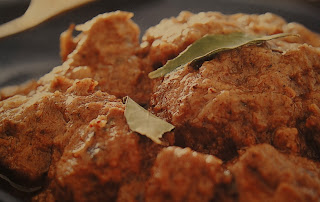
Lamb Madras

Originating from the south of India this curry gets its name from the city of Madras which is now know as Chennai. Typically in India this recipe would be made with Goat as it is more redely available, however goat can be tough cooked in this manner so the recipe suggests using lamb (beef could also be used).

Due to the amount of chillies commonly used in
Madras curry the sauce is red in colour and fairly hot. The full flavour intensifies over the cooking process resulting in flavours of toasted spices, sweet and sour from the tamarind and a smoothness from the coconut milk.

Lamb Madras - 'The Food of India' by Murdoch Books
Serves 6

1 kg boneless leg or shoulder of lamb, cut into 2.5cm cubes
1 1/2 tsps ground tumeric
2 tbls corriander seeds
2 tsps cumin seeds
10 dried chillies
12 curry leaves
10 garlic cloves, roughly copped
5cm piece of ginger, roughly chopped
1 tsp fennel seeds
1 tbls tamarind puree
4 tbls oil or ghee
3 large onions, sliced
625ml (2 cups) coconut milk
8cm cinnamon stick
6 cardamon pods
salt/pepper, to taste

Rub the cubed lamb with the ground tumeric. Place a small frying pan over low heat ad dry roast the coriander seed until aromatic. Remove and dry roast the cumin seeds, then repeat with the chillies. Grind them all to a powder in a pestle and mortar or spice grinder. Add six curry leaves, the garlic and ginger and grind to a paste.

Dry roast the fennel seeds in the pan until they brown and start to pop. Dissolve the tamarind in 125ml (1/2 cup) hot water.

Heat the oil or ghee in a heavy based saucepan o casserole over low heat and fry the onion for 5-10mins. until soft. Add the chili paste and cook for a few mins. or until aromatic. Add the meat and toss well to mix with the paste. Add 500ml (2 cups) of the coconut milk and 60ml (1/4 cup) water. Bring to t boil and simmer over medium heat for 10 mins., or until the liquid has reduced.

When the liquid has reduced, add the remaining coconut milk, the cinnamon stick, cardamon pods and whole fennel seeds. Season with salt and pepper. Cover and cook, partially covered over medium heat, for 1 hour or until the meat is tender, add the tamarind and check the seasoning. Stir until the oil separates out from the meat, then spoon it off or blot with paper towels before removing the pan from the heat.

Stir well and add the remaining six curry leaves. Garnish with more curry leaves.

Serve with steamed rice, indian bread such as naan or paratha and raita.

Photo - 'The Food of India' by Murdoch Books

Abla's Lebanese Kitchen


Abla Amad is an acclaimed cook and restaurateur who first opened what is now the famous Lebanese restaurant simply called 'Abla's' in Carlton in 1979 when there was only maybe two or three restaurants in Melbourne serving Lebanese cuisine. Abla today is still operating out of that same establishment in Carlton and has received a number of awards and accolades for her cooking over the years. She continues to serve traditional Lebanese cuisine to her loyal clientele base which now includes there children and grandchildren.

'Abla's Lebanese Kitchen' by Abla Amad is described by Abla herself as more than a cook book but also a memoir of her culture.

The first addition of 'Abla's Lebanese Kitchen' was published in 2001 and since not a lot has changed in this edition with the exception of some of her personal favourites which were not included in the first edition. Abla has also expanded her recipe collection in this book to include more vegetarian recipes to reflect today's new generation of health conscious people.

The book is broken into a number of sections including - Dips & Pickles, Bread, Pastry & Pies, Salads, Soups, Fish, Chicken & Poultry, Meat, Vegetable & Meat Dishes, Vegetarian, Yogurt, Sweets & Drinks. Also handy in this book are the suggested menu sections for Mezza, BBQ's etc.

Lovers of Lebanese food and cooking will fall in love with this absolutely fantastic traditional Lebanese cook book which covers all the favourites from Baba ghannooj, Tabbouleh, Felafel, Kibbee, Stuffed Vine Leaves, Kafta, Chicken & Rice, Baklava, Lebanese Coffee etc. etc. It is a beautifully illustrated book which includes a small glossary of spices, herbs and various types of produce used in the recipes.

The recipes you will find in this book are those which Abla has grown up with and still continues to cook not only in her restaurant today, but at home for her family and friends.

A wonderful cook book by a wonderful lady whom we can thank for introducing Lebanese food to Melbourne.